History
![]() Alpaca wool
Alpaca wool
Origin of the elegant wool
The alpaca is a species of camel that comes from the South American Andes. There, it is mainly bred for its wool. A
distinction can be made between two different types: the Huacaya alpaca and the Suri alpaca. The Huacaya has a finely
curled fleece, unlike the Suri, who have curly strands that hang down on the body. Alpacas come in around 20 different
colours, which range from white and grey through to brown and black. The domestication of alpacas began around 3,000 BC.
It was sometimes used as a beast of burden, but was primarily bred for its wool. Even the ancient Inca bred large herds
of alpaca and processed the wool into fabrics.
The wool today
In the past, textile products made from fine alpaca wool were considered as a sign of prosperity and were reserved for
the ruling class only. However, when the Spaniards conquered Peru and brought domesticated sheep with them, alpacas
moved further and further into the background. The native alpaca then primarily became the working animal of the poorer,
native population and nearly became extinct. It was only once the South American states gained independence and after
the industrialisation of the 19th century that the high value of alpaca wool was rediscovered. Breeding was resumed and
the wool exported on a grand scale around the world. Today, alpaca is once again widespread. There are estimated to be
around 3 million alpacas around the world, with most still being bred in Peru, Chile and Bolivia. These days, alpacas
are very popular in Europe and particularly in Germany. Increasing numbers of alpacas are kept both as a hobby and for
breeding.
Properties:
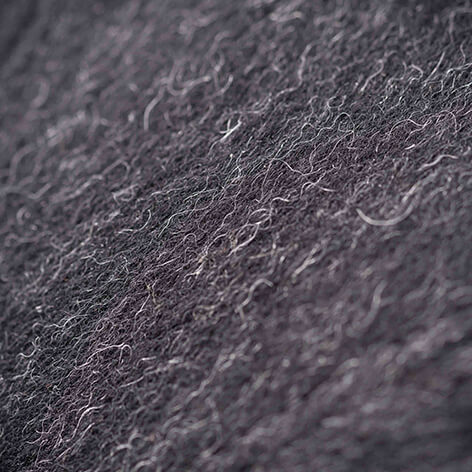
Alpaca wool is the fine, warming undercoat of the alpaca. This special wool is very lightweight, soft and has very good
warming properties. As the animals were exposed to extreme weather conditions and temperature fluctuations in their
original home (daytime: 18°, at night: -25°), the wool is exceptionally good for balancing temperature. The hair is
hollow and can therefore compensate for temperature differences very well. One alpaca provides 2-3 kilograms of very
fine fibre with a diameter of approx. 14 microns. Due to its smoothness, fineness and natural curl (crimp), the fibre
feels silky soft and is very stretchy and flexible. The surface scales of the fibre lie very flat, which means it is not
scratchy and feels very comfortable against the skin.
Differences in alpaca wool quality
Alpaca wool comes in different qualities. To differentiate, the fineness of the fibres is measured in micrometres (1
micrometre = 0.001 mm), just like sheep's wool. The colour and fineness is assessed by hand in Peru in order to sort the
fibres after shearing. This time-consuming task is challenging and rich in tradition, and is a skill that very few
people have mastered. A distinction is made between the following alpaca qualities: Royal Alpaca (19.5 micrometres),
Baby Alpaca (22.5 micrometres), Superfine Alpaca (26.5 micrometres), Huarizo (29 micrometres) and Coarse (32
micrometres). The finest, most high quality and costly alpaca quality is therefore the Royal Alpaca, which is a bit like
cashmere. This is followed by Baby Alpaca, which is usually shorn from young animals or from very protected body parts
on older animals.
Care tips:
Textile products made from alpaca wool are best washed by hand in lukewarm water with a wool detergent. It is important
not to rub or knead the fabric hard, but to move it gently back and forth in the water. This will keep it looking lovely
for a long time and will not felt the fabric. After washing, the fabric should be rinsed thoroughly in clear, lukewarm
water. There are specially treated wool textiles that can be washed on a washing machine's wool cycle. This will be
specified in the manufacturer's specific care instructions. It should, however, be washed without any fabric softener of
any kind, as these damage the wool fibres. To dry the fabric after washing, it should be gently rolled up in a hand
towel to squeeze out the majority of the liquid. Afterwards, the product can be removed and laid out to air dry.
Conclusion:
Due to the many properties listed, the advantages and versatile uses for alpaca wool, it is also sometimes called the
"fleece of the gods". It is a pure, natural product and hardly any other wool is as versatile and high quality as alpaca
wool. It is suitable for weaving, knitting and felting, and is perfect for making into clothing, blankets, bedspreads,
socks and even carpets. Textiles made from alpaca wool are particularly suitable for babies and those with allergies, as
it is very soft, kind to the skin and contains little lanolin.