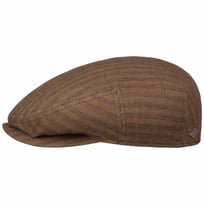
Cultivation of cotton
Cotton is the term given to the seed fibre of the cotton plant (lat. Gossypium), which is part of the mallow family. Cotton fibre is a natural plant fibre derived from the seed hair of the cotton plant. After flowering, the ovary, which is located inside the calyx, turns into an elongated capsule. This springs open and the seed fibres spring out. The cotton plant's long seed fibres are known as lint and the short seed hairs, which form a few days after flowering, are known as linter. Only the long fibres are spun into thin threads and used for manufacturing textiles. The linters are only suitable for creating other cellulose products. A cotton capsule contains around 30 seeds and each seed has around 2,000 - 7,000 fibres. The height of the cotton plant varies between 25 cm to over 2 m, depending on the type, climate and cultivation method used. In most areas, the cotton plants are annual and grown to shrub height, and only in Peru and northern Brazil do they use perennial shrubs, which can be up to 15 years old. Cotton plants take between 175 and 225 days between sowing and maturity. Growing areas are mostly in tropical zones, as the plants require plenty of water when sown and need a lot of warmth during their maturity stage. However, cultivation methods are very different in each individual country.
How harvesting works
On the huge cotton plantations in the southern United States, gigantic, high-tech machines or even low-flying airplanes are used to facilitate the chopping, sawing, picking and pest control processes. In poorer countries, work continues to be done by hand and with the help of teams of oxen or buffalo. Picking by hand, however, has advantages in terms of quality. Because only the dazzlingly white and high-quality fibre tufts are collected, and the capsules that are not yet completely ripe are left for a few more days. During mechanical harvests, the entire yield of a field is brought in at once, after it has been artificially defoliated by spraying. The cotton is then taken to dry and mature for around 30 days before it is put through the ginning machine to remove the fibres from the seeds. 100 kg of cotton yields just approx. 35 kg of usable fibres, the rest being seeds and waste. For transport, the cotton fibres are shaped into over 200 kg bales and tied together. The cotton is then shipped, stored and taken to the spinning mill.
Cotton - a long history
The cotton plant is a very old crop. The earliest references to the use of cotton textiles were found in caves in Mexico and were estimated to be around 7,000 years old. At around the same time we can see proof of the use of cotton in China, and even the Incas and Mayans knew about cotton and how to process it into textiles at this time. From around 800 BC, Arab traders brought cotton to Europe for processing. From England, the cotton seeds eventually also made it to America, where cotton was then planted systematically on large plantations. During this time, optimised working processes using slave labour were utilised, resulting in slaves suffering from bad working and living conditions. This prevailed until the invention of automated machinery to harvest cotton in the USA and Europe.
Cotton for textile production
With the industrial revolution and the invention of the spinning machine and mechanical loom, cotton production reached unprecedented levels, as it became possible to expertly spin and weave the fibres. The global cotton breakthrough came with the invention of the ginning machine. By 1900 cotton had a market share of 80% of the global textile market. However, since the 20th century, the natural fibre has been rivalled by chemically created fibres, such as polyester. Nevertheless, the manifold properties and advantages of cotton textiles remain unparalleled, which is why a third of all materials used in the textile industry are made of cotton to this day. The primary growing areas are India, China, the USA, and Africa. Even today, cotton is still the most popular natural fibre in the textile industry.