History:
![]() Merino wool
Merino wool
The origin and distribution of merino wool
Merino wool refers to the wool obtained from the Merino sheep (in short: the Merino). This is a special breed of sheep
with particularly fine, thin and soft wool. Compared to conventional sheep's wool (30-50 microns), the Merino's fibres
are just half the thickness (15-25 microns). The Merino sheep originates from North Africa. During the High Middle Ages,
the Merino sheep arrived in Spain, where they gained great economic and social importance due to their sought-after
wool. For many centuries, the precious wool was a commodity of the monarchy and exporting the animals was punishable by
death. It was not until the 19th century that there were large Merino herds in other countries.
Hard to imagine the textile industry without it
Today, there are herds of Merino sheep in many parts of the world, but Australia and New Zealand are the world's largest
suppliers of merino wool. There are many different crossbreeds of Merino sheep, all of which differ in their wool. For
example, the Australian and New Zealand Merinos are known for their very bright to white wool, which can be dyed very
well. The German Merinos, however, are somewhat more robust and have rougher wool that varies from beige to brown. As
the German merino wool is not as soft as the Australian or New Zealand wool, the wool used in the clothing and textile
industry is usually imported. The animals are shaved down to the skin and each animal produces 3-4 kilograms of wool per
year. In some cases, up to ten kilograms of merino wool can be obtained from the top animals of special breeds each
year. Thanks to its many beneficial properties, merino wool has become very important in recent years.
Properties:
Pure warmth guaranteed
Merino wool is primarily known for its very good thermal insulation, as Merino sheep sometimes have to brave very cold
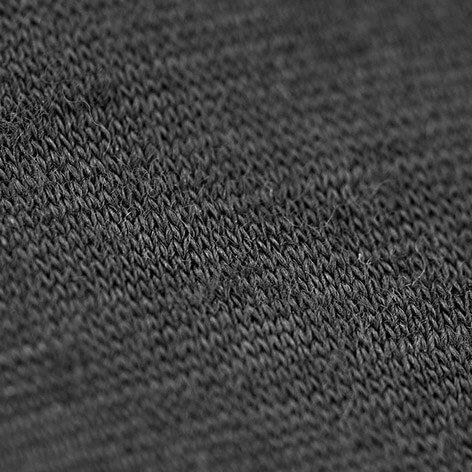
weather conditions. Another feature of this special wool is that the fibres are very fine and soft, so they feel
significantly more comfortable against the skin than conventional sheep's wool. In addition, it regulates the body
temperature, meaning that merino wool products can be worn both in the summer and in the winter. Merino wool also wicks
away moisture and is breathable. So the skin always stays dry.
Natural material with great properties
Just like normal sheep's wool, merino wool is flame-resistant and slightly water-repellent on the outside. It is also a
very good choice for those with allergies or sensitive skin, as the fibres are hypoallergenic and feel cuddly soft on
the skin. Textiles made from merino wool are naturally very stretchy and return to their original shape after being
stretched out, so do not lose their shape stability. In addition, merino wool is antibacterial and has very good dirt
and odour-repellent properties, which is why merino wool rarely needs to be washed. After washing, merino wool dries out
very quickly and even warms when wet. The wool also provides natural sun protection and is a natural, renewable raw
material.
Care tips:
Unlike conventional wool, merino wool is very easy to care for and simple to wash. Textiles made from merino wool can be
washed at 30-40° on a normal wash cycle with a conventional detergent. Wool detergents made for normal, rough wool are
not suitable for merino wool and can even damage it. Bleach and fabric softener should also be avoided. When drying, you
should take care not to dry merino wool garments in the tumble dryer. Thanks to their stable shape, they can easily be
hung out on the washing line to dry. However, it cannot hurt to dry them flat instead. Pilling can be avoided by
occasionally washing the merino products with rougher products (e.g. jeans).
Conclusion:
Quality does not always have to be expensive
All in all, merino wool has lots of positive properties and differs from conventional wool in its fineness and its soft,
comfortable feeling against the skin. It combines the positive attributes of wool without its disadvantages, such as the
scratchiness against the skin or how long it takes to dry after washing. Thanks to these positive properties, merino
wool can be used for lots of different purposes. Merino is relatively inexpensive yet very high quality, stretchy and
has good heat-insulating properties. Because the fibres are particularly soft, comfortable and lightweight, merino wool
is ideal for items of clothing that sit directly on the skin, e.g. jumpers, scarves, socks or gloves. Thanks to these
properties, merino wool is also often used for baby clothing.
Ideal for any activity
Like any type of new wool, merino is also extremely durable, dirt-repellent, provides natural UV protection, is
breathable, temperature-regulating and dries quickly. These properties also make merino wool the ideal material for
outdoor clothing and activities such as hiking, camping, mountaineering, horse riding, mountain biking or sailing.
Often, merino wool, like conventional wool, is blended with other materials to further enhance its positive attributes
and to equip it for particular uses.